





Importing Glass Bottles from China to the UK? You May Not Have to Pay 52.97%
Release time: 2026-09-14
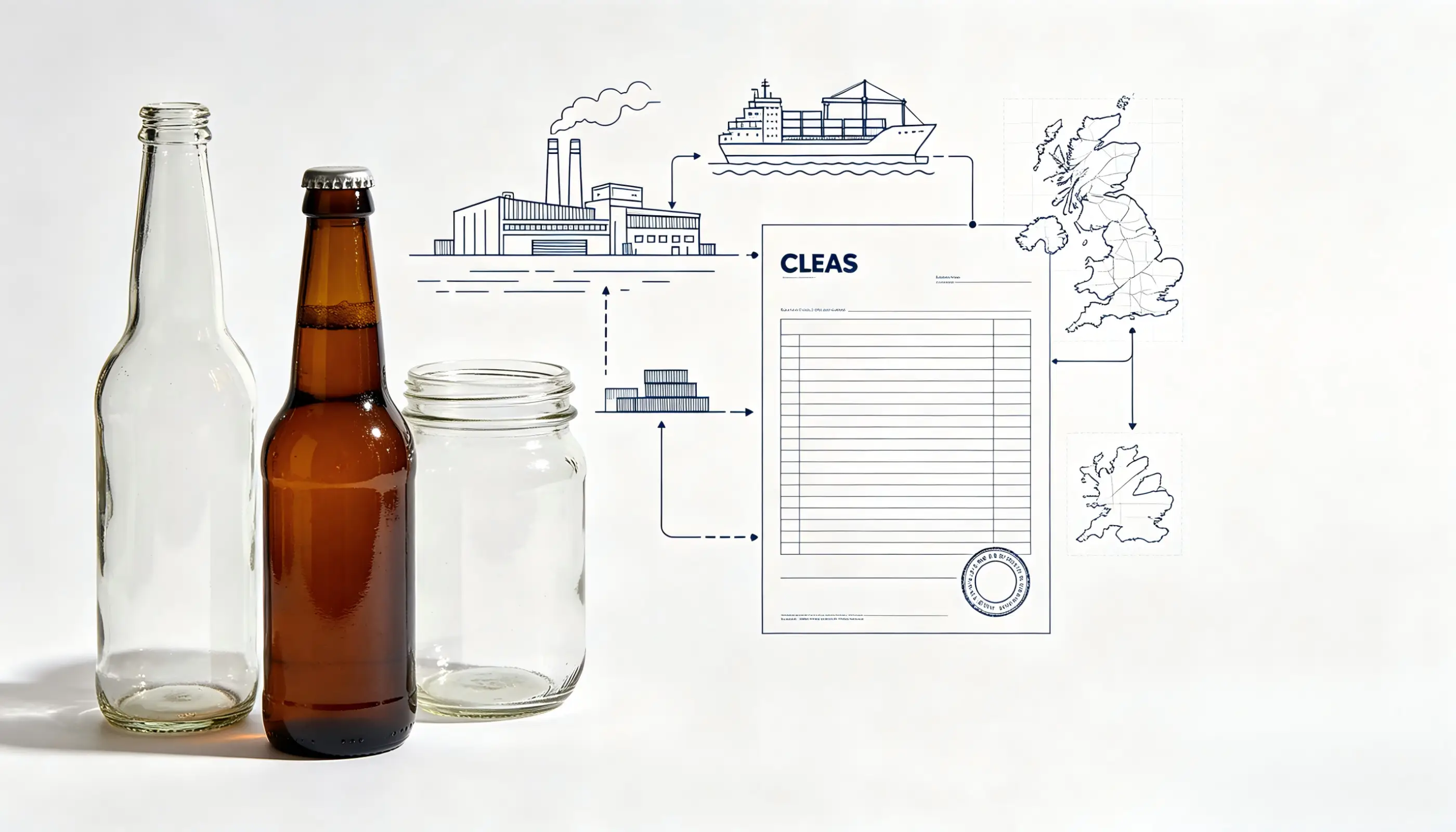
If you import glass bottles, jars or other glass packaging from China into the UK, the number “52.97%” is likely to get your attention. But that is not a blanket rate for every Chinese producer.
From 9 September 2026, the UK introduced provisional anti-dumping measures on certain glass containers originating in China. Depending on the producer/exporter category, the provisional rate ranges from 24.65% to 52.97%. For a UK buyer, that difference can materially change landed cost, supplier selection and even whether a packaging project remains commercially viable.
This guide explains what changed, which products are covered, why the actual manufacturer matters, what paperwork is required for specified rates, and what UK importers should check before placing their next order.
Important: This article is general commercial information, not legal, customs or tax advice. Commodity classification and duty treatment should be confirmed with HMRC, the UK Trade Tariff and/or your customs adviser or broker.
The short version
- The provisional measure took effect on 9 September 2026.
- It covers specified glass containers used for the conveyance or packing of goods and classified under listed UK commodity codes in heading 7010.
- The provisional rates are 24.65%, 25.88%, 26.87% and 52.97%, depending on the producer/exporter category.
- A valid commercial invoice with the prescribed declaration is required to qualify for a specified overseas exporter rate; otherwise the residual rate applies.
- The measure is provisional for up to six months, or until a definitive remedy is implemented sooner.
1. What changed in September 2026?
The UK Trade Remedies Authority (TRA) is investigating alleged dumping of certain glass containers originating from China under case AD0087. The investigation began on 5 March 2026. On 8 September 2026, the UK published Trade Remedies Notice 2026/25 accepting the TRA’s provisional recommendation, with the provisional anti-dumping measure taking effect the following day.
The provisional finding is that the goods concerned are being dumped and have caused or are causing injury to UK industry. During the provisional period, importers are required to provide a guarantee for the estimated anti-dumping amount, which may take the form of a bank guarantee, bond or cash.
2. Is the duty really 52.97%?
Sometimes – but not for every producer. The official provisional rates published by the UK are:
| Producer / exporter category | Provisional duty | Additional code |
| Huaxing Group | 26.87% | 8A92 |
| SPG Group | 24.65% | 8A93 |
| Non-sampled co-operating exporters/producers | 25.88% | 8A94 |
| All other overseas exporters | 52.97% | 8A95 |
| Goods outside the product description | 0.00% | 8A96 |
For procurement teams, this means a quotation saying only “Made in China” is no longer enough information for landed-cost planning. You need to know who actually produced the goods, which category/additional code applies, and whether the required import documentation can support that treatment.
3. Which glass bottles and jars are covered?
The measure covers carboys, bottles, flasks, jars, pots, phials, preserving jars and other glass containers of a kind used for the conveyance or packing of goods, whether or not supplied with a closure.
In practical purchasing terms, many common food, beverage, cosmetic and general packaging containers may fall within the product description if they also fall under one of the listed UK commodity codes.
The listed UK Global Tariff commodity codes are:
7010 9010 00; 7010 9041 00; 7010 9043 00; 7010 9045 00; 7010 9047 00; 7010 9051 00; 7010 9053 00; 7010 9055 00; 7010 9057 00; 7010 9061 00; 7010 9067 00; 7010 9071 00; 7010 9079 00; 7010 9091 00; 7010 9099 00.
4. What is excluded?
The official product description excludes:
- ampoules;
- containers made of tubular glass;
- glass containers with a nominal capacity of 2.5 litres or more; and
- standalone stoppers, lids or other closures of glass.
An exclusion should never be assumed from appearance alone. The product description, technical characteristics and tariff classification need to be considered together.
5. Does buying through a Chinese trading company avoid the duty?
No. Changing the company that issues the sales quotation does not, by itself, change the origin or tariff treatment of the physical goods. For UK buyers using a Chinese sourcing or trading company, the key question is still the identity of the actual producer and whether the import documentation meets the conditions for the applicable rate.
This is why supply-chain transparency has become more valuable. A sourcing partner should be able to identify the factory, keep the commercial documents consistent and help the buyer collect the information its customs broker needs before shipment.
6. Can an importer simply use HS code 7013 instead of 7010?
Not simply to avoid the measure. Commodity codes must reflect the objective characteristics and intended category of the goods under the applicable tariff rules. A glass article that is genuinely classifiable elsewhere may fall outside this measure, but re-labelling a packaging container with a different code does not make the underlying customs issue disappear.
If classification is uncertain, obtain a proper classification review before the order ships. For recurring or high-value imports, UK businesses may also consider whether a formal Advance Tariff Ruling is appropriate.
7. Why the commercial invoice now matters more
Trade Remedies Notice 2026/25 states that, to qualify for the duty rate applicable to a specified overseas exporter, a valid commercial invoice must be presented to HMRC together with the prescribed declaration. The declaration identifies the volume and goods, the producer’s company name and address, the additional code and country, and must be dated and signed by an identifiable official of the entity issuing the invoice.
If the required invoice or declaration is not provided, the residual rate applies. In other words, the purchasing decision and the paperwork decision are now connected.
8. What should UK importers do before the next order?
Confirm the product. Check the bottle or jar specification, capacity, use, closure and material.
Confirm the commodity code. Do not rely on a code copied from an old supplier invoice without reviewing whether it remains correct for the actual product.
Identify the actual Chinese producer. Ask who physically manufactures the glass container, not only who exports or invoices it.
Check the applicable producer category and additional code. Use the current UK notice and confirm the supporting commercial invoice declaration requirements.
Recalculate landed cost. Compare the product price together with freight, customs value, normal import charges and the provisional anti-dumping exposure.
Keep alternatives open. Where commercially sensible, compare alternative factories, specifications, materials or packaging formats – but only where the alternative is genuine and compliant.
9. A simple landed-cost example
Assume, purely for illustration, that the customs value of a shipment of covered glass packaging is £20,000. Applying 26.87% produces a provisional anti-dumping amount of £5,374, while 52.97% produces £10,594. That is a £5,220 difference before considering other import costs.
The example is intentionally simplified and is not a customs calculation for a real shipment. Its purpose is to show why identifying the correct producer category before issuing a purchase order can be commercially significant.
10. What about goods imported before 9 September 2026?
This issue should not be ignored. The UK required registration of imports of the goods concerned from 24 March 2026 under Trade Remedies Notice 2026/12. That notice explains that, if a definitive remedy is implemented in respect of registered goods, duties may in certain circumstances be payable from a date up to 90 days before implementation of a provisional remedy.
Businesses with shipments during the registration period should therefore keep their import records and discuss any potential retrospective exposure with their customs adviser.
11. Is this already the final UK anti-dumping duty?
No. The rates in this article are provisional. The provisional measure applies for a maximum of six months from 9 September 2026, or until a definitive remedy is implemented sooner. The TRA will submit a final recommendation before the investigation concludes.
If a definitive duty is lower than the provisional rate, only the lower definitive amount is collected. If the definitive rate is higher, the notice states that only the amount secured under the provisional duty is collected for the provisional period.
How Gowing can help UK packaging buyers
For UK buyers, the answer is not to chase the lowest ex-factory price and discover the duty problem when the goods reach the border. The better approach is to build customs-relevant information into sourcing from the beginning.
Gowing works with international buyers sourcing products and packaging from China. For glass packaging projects, we can help buyers compare manufacturing options, identify the actual factory behind a quotation, organise product specifications and supplier information, and prepare the commercial information your UK customs broker may need to review.
Planning a UK glass packaging order from China? Send Gowing the bottle or jar photo/drawing, capacity, intended use, estimated quantity and current supplier/manufacturer information. We can help you organise a sourcing review before you commit to the next shipment.
FAQ
Does every Chinese glass bottle now face a 52.97% UK duty?
No. The provisional rates published by the UK range from 24.65% to 52.97%, depending on the producer/exporter category. Goods outside the defined product scope are excluded.
What rate applies to non-sampled co-operating exporters/producers?
The published provisional rate is 25.88%, with additional code 8A94. Importers should confirm that the relevant producer/exporter is actually entitled to that category rather than assuming the rate applies.
When did the UK measure start?
The provisional anti-dumping measure took effect on 9 September 2026.
Are glass containers of 2.5 litres or more covered?
The product description excludes glass containers with a nominal capacity of 2.5 litres or more.
Can I avoid the duty by buying through a trading company?
Not simply by changing the seller. Origin, product scope, classification, actual producer and required documentation remain relevant.
Is the measure permanent?
Not yet. These are provisional measures while the TRA investigation continues.