





52.97% UK Glass Bottle Duty: How Importers Can Reduce Documentation Risk
Release time: 2026-09-16
A practical 2026 pre-shipment checklist for UK buyers sourcing glass bottles and jars from China
EDITOR’S NOTE: The UK measure discussed below is provisional. Recheck the current UK Government notice and the active trade-remedies case before any shipment.
The 52.97% Problem Is Not Just About Price
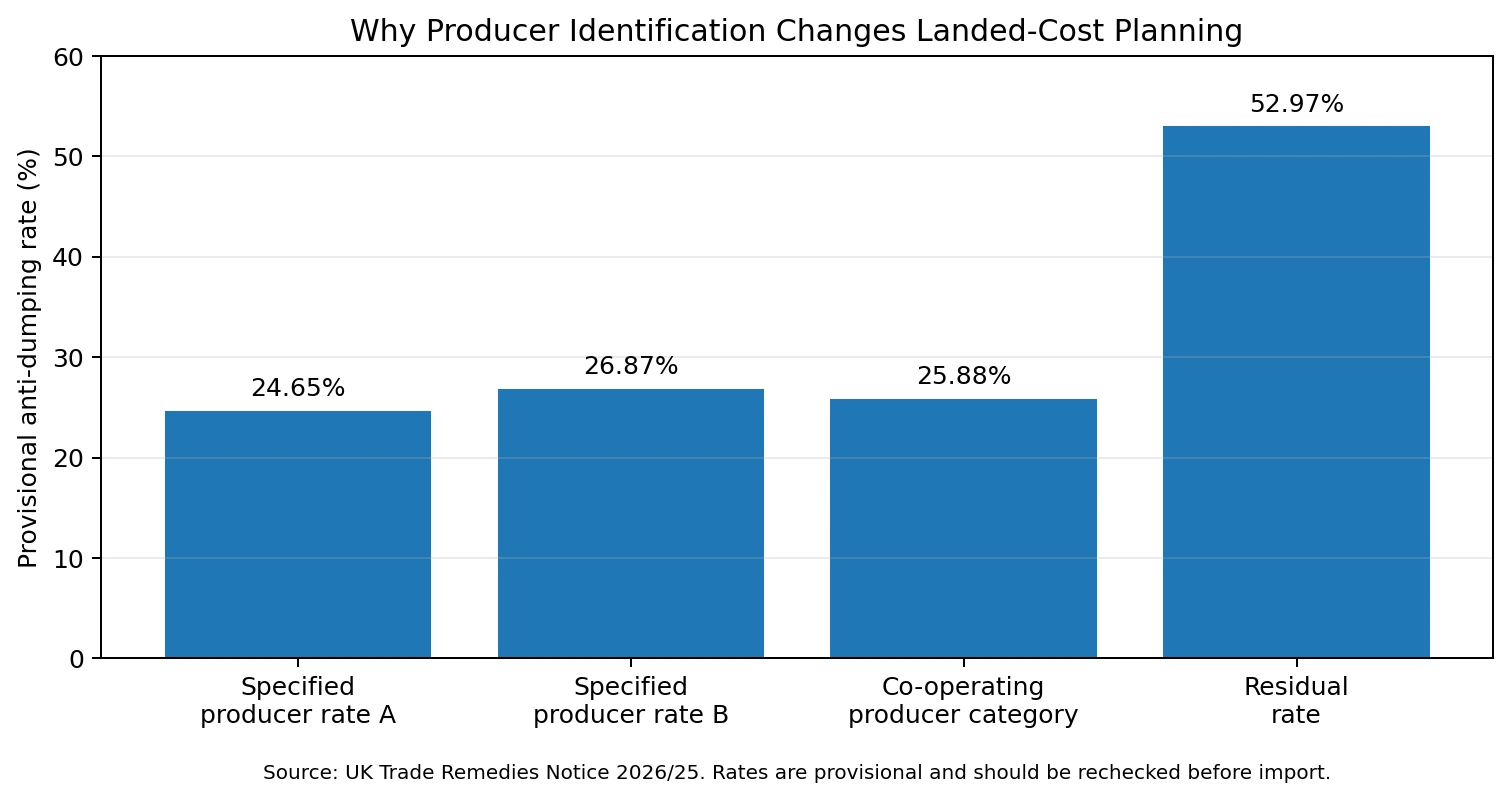
For a UK buyer importing covered glass bottles or jars from China, the biggest sourcing mistake in 2026 may be treating anti-dumping duty as something to check only after the purchase order is placed. Under the provisional UK measure that took effect on 9 September 2026, covered goods can attract different rates depending on the producer/exporter category. The residual rate is 52.97%.
That means two visually identical bottles with the same ex-factory price can create very different landed-cost outcomes if the underlying producer category and import documentation are different. Procurement teams therefore need to verify the supply chain before shipment, not after the container reaches the UK.
This article focuses on one practical question: what should a UK importer verify to avoid unnecessarily falling into the residual-rate position? It is general commercial information, not legal, customs or tax advice. Classification and duty treatment should be confirmed with HMRC, the current UK Trade Tariff and/or a qualified customs adviser.
1. Why Can the Residual Rate Apply?
The current UK notice states that a valid commercial invoice with the prescribed declaration must be presented to HMRC in order to qualify for the duty rate applicable to a specified overseas exporter. If the invoice is not presented or the declaration is not made, the residual rate applies.
For a buyer, this turns supplier verification into a customs-relevant task. Knowing only the name of the seller or trading company is not enough. The documentation must support who produced the goods and which additional code applies.
2. Check the Product Before You Check the Rate
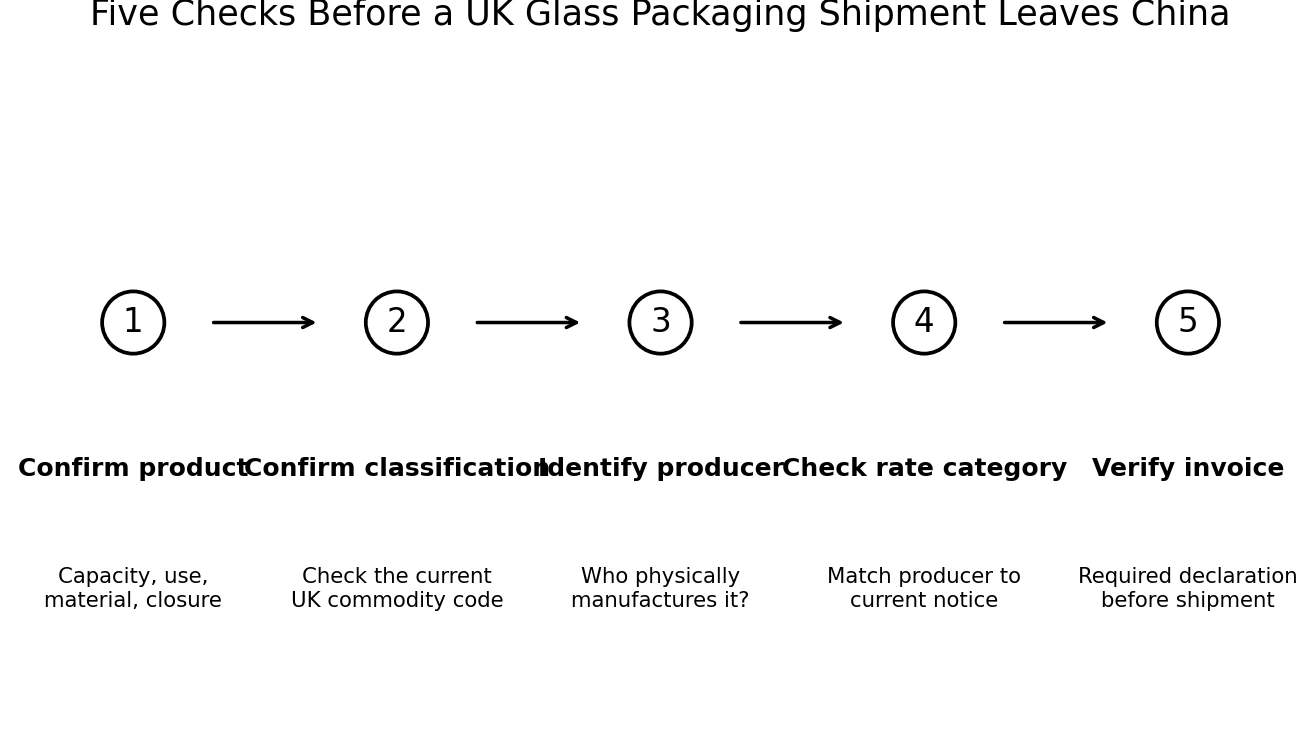
Start with the physical product. The provisional measure covers specified glass containers used for conveying or packing goods, including many bottles, jars, pots, phials and preserving jars, whether or not supplied with a closure. The notice excludes ampoules, containers made of tubular glass, glass containers with a nominal capacity of 2.5 litres or more, and standalone glass stoppers, lids or other closures.
Do not decide that a product is inside or outside the measure from a photograph alone. Capacity, construction, intended use and tariff classification all matter.
3. Verify the Commodity Code
The measure applies to listed UK Global Tariff commodity codes under heading 7010. An old invoice, a supplier’s historic code or a code copied from an online marketplace should not be treated as automatic proof of classification.
For repeat or high-value imports, classification should be reviewed before production or shipment. A genuine classification difference can change treatment; simply changing the code description on paperwork cannot.
4. Identify the Actual Manufacturer
Ask a direct question: who physically manufactures the glass container? This matters because the provisional rates are linked to producer/exporter categories rather than to a generic ‘China’ rate.
A sourcing intermediary can still be useful, but the supply chain should remain transparent. The importer should be able to connect the quotation, specification, factory identity, invoice and import declaration without contradictory information.
5. Match the Producer to the Current Rate Category
Under the notice published on 8 September 2026, specified producer categories carry provisional rates in the mid-20% range, while the residual category is 52.97%. Because the investigation remains active, buyers should not hard-code today’s rate into a long-term costing model without a review date.
The safer commercial process is to record the producer identity, applicable additional code, source notice and date checked as part of the purchase file.
6. Make the Commercial Invoice Part of the Purchase Checklist
The required declaration is not a minor administrative detail. The notice requires the declaration to identify the volume and goods, producer name and address, additional code and country, and to be dated and signed by an identifiable official of the invoice-issuing entity.
The practical lesson is simple: do not wait until the shipment is on the water to discover that the invoice format or declaration is incomplete. Agree the documentation requirement before the final balance is paid and before export documents are issued.
7. A Simple Cost Example
Assume a shipment has a customs value of £20,000 and the goods are within scope. At 25.88%, the provisional anti-dumping amount would be £5,176. At 52.97%, it would be £10,594. The difference is £5,418 before other import costs.
This is deliberately simplified and is not a customs calculation for a real shipment. It shows why a small documentation or producer-verification failure can become a large procurement-cost issue.
8. Five Questions to Ask Before Paying the Deposit
- Is this exact bottle or jar within the product description and listed commodity codes?
- Who is the physical glass manufacturer behind the quotation?
- Which current producer/exporter category and additional code apply?
- Can the commercial invoice carry the prescribed declaration correctly?
- Has the landed-cost model been recalculated using the applicable provisional rate?
9. What Gowing Can Do Before Shipment
Gowing helps international buyers organise sourcing information before a glass packaging order is committed. For UK projects, that can include confirming the physical product specification, identifying the actual manufacturing source behind a quotation, organising factory and commercial information, comparing compliant manufacturing options and preparing a document checklist for the buyer’s customs broker to review.
The goal is not to promise a particular customs outcome. It is to reduce avoidable uncertainty between sourcing, documentation and import planning.
Planning a UK glass bottle or jar order from China? Send Gowing the product photo or drawing, capacity, intended use, estimated quantity and any known manufacturer information. We can help organise a pre-shipment sourcing review before you commit to production.
Frequently Asked Questions
Does every covered Chinese glass bottle face 52.97%?
No. The provisional notice sets different rates by producer/exporter category. The residual rate is 52.97%.
Can a trading company invoice remove the anti-dumping duty?
Not by itself. Product scope, origin, actual producer, applicable category and documentation remain relevant.
What happens if the required invoice declaration is missing?
The current notice states that if the required invoice is not presented or the declaration is not made, the residual rate applies.
Are the September 2026 rates permanent?
No. They are provisional while the investigation continues, for up to six months from 9 September 2026 or until a definitive remedy is implemented sooner.
Should buyers change the HS code to avoid the measure?
No. Classification must reflect the actual product under the applicable tariff rules. If classification is uncertain, obtain a proper review.
Official Sources
• UK Trade Remedies Authority — AD0087: Glass Containers from China (active investigation).