



How Does Eco-Friendly Flint Glass Improve Premium Bottle Packaging?
Release time: 2026-08-25
Table of Contents
For premium products, the bottle is often part of the product experience. Color, clarity, weight, surface finish, and even the way light passes through the glass can influence how consumers perceive what is inside.
This is why eco-friendly flint glass packaging has become an interesting option for spirits, perfume, cosmetics, and other premium applications. Flint glass combines optical clarity with the design flexibility expected from modern glass packaging, while sustainable design can be incorporated into the material and manufacturing strategy.
What Is Flint Glass?
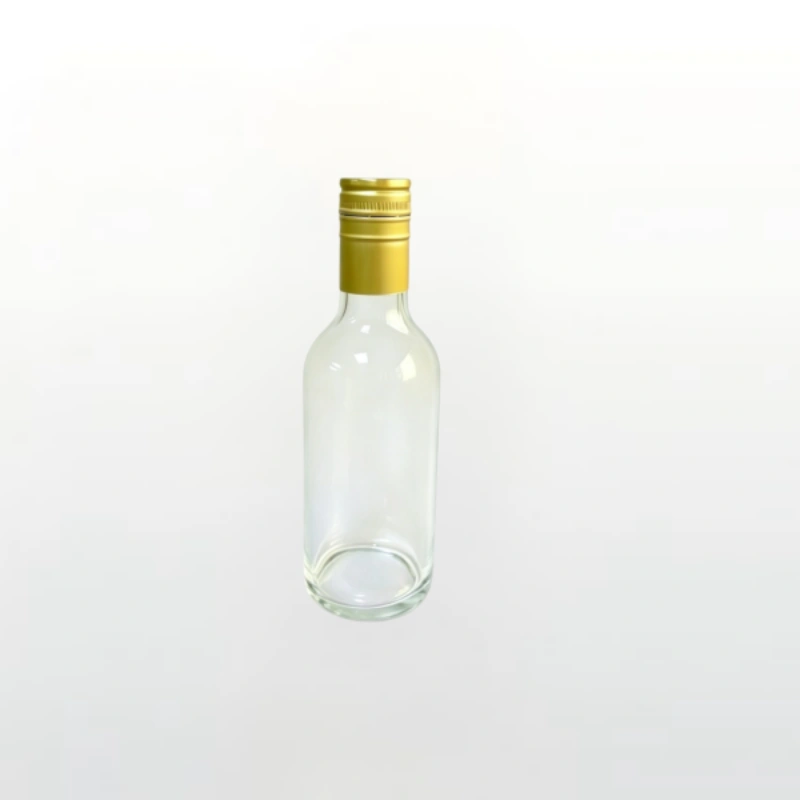
Flint glass is a clear, relatively colorless container glass designed to provide high visual clarity.
Compared with darker or more strongly colored glass, flint glass allows consumers to see the product more clearly. This makes it particularly valuable when product appearance is part of the purchasing decision.
Typical applications include:
- Premium spirits
- Vodka and gin
- Perfume
- Skincare
- Cosmetics
- Specialty beverages
- Food products where product visibility matters
The term “flint” does not simply mean “clear glass.” In premium packaging, clarity needs to be combined with consistent color, dimensional accuracy, surface quality, and manufacturing stability.
Why Does Clarity Matter in Premium Packaging?
A premium bottle has two jobs.
First, it protects the product.
Second, it communicates the brand.
Clear glass can support the second function by allowing the liquid, color, texture, and fill level to become part of the visual presentation.
For example, a vodka brand may want the purity of the liquid to remain visible. A perfume brand may use the bottle to emphasize the color of the fragrance. A premium skincare product may rely on a clean, minimalist container to communicate formulation quality.
In these cases, the optical characteristics of the bottle are not simply aesthetic details. They are part of the packaging specification.
How Does Flint Glass Support Premium Bottle Design?
The value of Flint Glass Bottles comes from the combination of optical performance and manufacturing flexibility.
High Visual Clarity
Clear glass creates strong product visibility and allows packaging designers to work with the natural color of the contents.
Consistent Appearance
Premium applications require stable color and surface quality from batch to batch. Variations can become particularly noticeable when bottles are displayed side by side.
Design Freedom
Flint glass can be used in a wide range of bottle shapes, from minimalist cylindrical formats to more complex premium designs.
Surface Treatment
Depending on the application, glass can be combined with frosting, embossing, printing, coating, or other decorative techniques to create differentiation.
Structural Performance
Visual quality cannot compensate for poor mechanical performance. The bottle still needs to withstand filling, transportation, stacking, and consumer handling.
This is why good premium packaging is a balance between appearance and engineering.
Can Flint Glass Be Eco-Friendly?
Yes, but “eco-friendly” should describe a broader packaging strategy rather than simply the appearance of the glass.
An environmentally responsible flint glass bottle can incorporate several approaches:
- Recycled glass content where technically appropriate
- Lightweighting
- Efficient furnace operation
- Optimized bottle geometry
- Durable packaging design
- Reduced unnecessary material
- Compatible closure and decoration systems
- Effective end-of-life recovery
The objective is to reduce environmental impact without compromising the performance expected from premium packaging.
This is especially relevant because high-end packaging sometimes uses heavy glass to create a sense of luxury. A well-engineered bottle can challenge that assumption by optimizing material distribution rather than simply increasing wall thickness.
How Does Lightweighting Improve Flint Glass Packaging?
Bottle weight is an important engineering variable.
A heavier bottle may communicate quality through physical weight, but excessive mass increases material consumption and can increase transportation requirements.
Lightweighting aims to reduce unnecessary mass while maintaining structural performance.
| Design Factor | Traditional Heavy Bottle | Optimized Lightweight Bottle |
|---|---|---|
| Glass usage | Higher | Reduced |
| Transportation load | Higher | Lower |
| Material efficiency | Lower | Higher |
| Structural requirement | High | Requires optimized engineering |
| Premium appearance | Strong | Can remain strong with proper design |
| Sustainability potential | Moderate | Higher |
The important point is that lightweighting is not simply about making glass thinner.
Bottle geometry, stress distribution, neck design, base thickness, forming technology, filling conditions, and transportation requirements all influence how much material is actually necessary.
Why Is Bottle Thickness Important?
Thickness affects both perception and performance.
A thick base, for example, can create the substantial feel associated with luxury perfume or spirits bottles. However, adding material everywhere is rarely the most efficient way to achieve that effect.
Modern bottle design can instead use targeted material distribution.
For example:
- A reinforced base can provide stability.
- Optimized shoulder geometry can improve stress distribution.
- A controlled neck design can balance closure compatibility and material use.
- Localized thickness can preserve tactile characteristics without unnecessarily increasing the total bottle weight.
This approach allows premium packaging to maintain its visual and physical identity while improving material efficiency.
How Do Frosting and Embossing Add Value?
Premium packaging is increasingly about tactile differentiation.
Frosted surfaces can create a soft, matte appearance while reducing transparency in selected areas.
Embossing can create three-dimensional brand marks, patterns, or decorative elements directly on the glass.
These techniques can be particularly useful for:
- Vodka
- Gin
- Perfume
- Skincare
- Premium spirits
The challenge is maintaining consistency.
A decorative process should not compromise bottle dimensions, filling-line compatibility, surface quality, or the integrity of the glass container.
This is why customization needs to be treated as an engineering process rather than simply a visual exercise.
Why Is Flint Glass Popular for Spirits and Perfume?
Both spirits and perfume depend heavily on visual presentation.
For spirits, the bottle can communicate:
- Brand heritage
- Product quality
- Premium positioning
- Craftsmanship
- Product color and clarity
For perfume, the bottle may be even more closely associated with the brand identity.
A Premium Flint Glass Bottle can provide a clean visual platform for distinctive shapes, thick bases, embossing, frosting, printing, and other design elements.
The material therefore supports both product protection and brand storytelling.
Eco-Friendly Flint Glass Packaging vs Conventional Premium Packaging
The difference is not necessarily the type of glass itself. The more meaningful difference is how the bottle is designed and manufactured.
| Factor | Conventional Premium Approach | Eco-Friendly Flint Glass Approach |
| Bottle design | Focus on appearance | Appearance + material efficiency |
| Glass weight | May prioritize heavy feel | Optimized for performance |
| Recycled content | Optional consideration | Considered where feasible |
| Manufacturing | Performance-focused | Performance + resource efficiency |
| Decoration | Primarily aesthetic | Aesthetic + material compatibility |
| End of life | Often considered separately | Integrated into packaging strategy |
This approach allows brands to maintain a premium visual identity without treating sustainability as an afterthought.
What Should Brands Consider When Sourcing Flint Glass Bottles?
The right bottle specification depends heavily on the application.
Before placing an order, procurement teams should evaluate:
Glass clarity:
Does the visual quality match the product positioning?
Color consistency:
Can the supplier maintain stable appearance across production batches?
Bottle dimensions:
Are tolerances compatible with filling and packaging equipment?
Weight:
Is the bottle heavy because it needs to be, or simply because the design has not been optimized?
Decoration:
Can frosting, embossing, printing, or coating be applied consistently?
Closure:
Does the neck finish match the intended cap, pump, sprayer, or stopper?
Sustainability:
Can recycled content, lightweighting, and recyclability be incorporated into the specification?
For brands sourcing internationally, supplier quality control and production consistency are equally important. Premium packaging is only premium if the same standard can be maintained throughout commercial production.
How Can Brands Combine Premium Design With Sustainability?
The most effective approach is not to choose between appearance and sustainability.
Instead, brands can design the two together.
A premium bottle can combine:
Clear Flint Glass + Optimized Geometry + Appropriate Recycled Content + Lightweighting + Controlled Decoration + Recyclable Packaging Components
This creates a packaging specification that addresses both the consumer-facing experience and the material lifecycle.
That is the real opportunity behind eco-friendly flint glass packaging: sustainability does not have to make premium packaging look ordinary.
Develop Premium Flint Glass Packaging With Go Wing
Go Wing provides glass packaging solutions for spirits, beverages, perfume, cosmetics, essential oils, food, and other applications.
For brands looking for eco-friendly flint glass packaging, Flint Glass Bottles, or premium glass packaging that combines design flexibility with circularity, Go Wing can support packaging development around product requirements, bottle structure, visual appearance, customization, and material efficiency.
Explore Infinite Circular Glass to learn more about Go Wing’s approach to circular glass packaging.
FAQ
What is flint glass?
Flint glass is a clear container glass designed to provide high optical clarity and relatively low visible coloration, making it suitable for products where appearance and product visibility are important.
Is flint glass suitable for premium spirits?
Yes. Flint glass is commonly suited to premium spirits because its clarity, surface quality, and design flexibility can support high-end bottle presentation.
Can flint glass packaging be eco-friendly?
Yes. Sustainability can be improved through recycled content, lightweighting, efficient manufacturing, optimized geometry, and effective recycling pathways.
What is the difference between flint glass and amber glass?
Flint glass is generally selected for clarity and product visibility, while amber glass is commonly used when light protection is more important. The appropriate choice depends on the product and its formulation.
Can flint glass bottles be customized?
Yes. Depending on manufacturing capabilities, customization can include bottle shape, dimensions, embossing, frosting, printing, surface treatment, and other decorative elements.
Does a heavier glass bottle mean higher quality?
Not necessarily. Weight can contribute to a premium tactile experience, but excessive weight does not automatically improve structural performance. Good bottle engineering balances weight, strength, appearance, and manufacturing requirements.
.webp)